
Exploring the IT Job Market in Switzerland: Opportunities and Trends for 2026
By Patryk Domasik · Created with AI assistance
Switzerland's IT job market requires a closer look than a single national salary or hiring forecast can provide. This guide retains the focus of our May 2026 article and was refreshed on September 8 with linked evidence and a practical application workflow.
Current state of the IT market
The long-term skills picture and today's vacancies answer different questions. Research commissioned by ICT-Berufsbildung Schweiz projects a need for 54,400 additional ICT specialists by 2033. That is a forecast over several years, not a count of open jobs available today. See the researcher's explanation and study context.
For your own search, build a shortlist of actual roles and compare their requirements. A broad skills forecast cannot tell you whether a particular employer is hiring at your experience level or offering your preferred working arrangement.
Skills and technologies to evaluate
The original guide highlighted cloud computing, cybersecurity, data engineering, AI integration and embedded systems. Use these as areas to investigate rather than a ranked list of guaranteed opportunities.
- Cloud roles: examine platform experience, operations ownership and security expectations.
- Cybersecurity: distinguish governance, detection, engineering and incident-response work.
- Data and AI: check whether the role concerns data pipelines, applied models, evaluation or production integration.
- Embedded systems: look for hardware interfaces, reliability constraints and the language/toolchain used by the team.
Record which requirements you can demonstrate with your experience. Repeated requirements across your shortlist provide a more relevant preparation plan than trying to learn every popular technology.
Comparing salaries and compensation
Keep base salary separate from total compensation, and note whether a figure is monthly or annual, gross or net, and full-time or part-time. A reported total including bonus and equity is not directly comparable with a base-salary offer.
The Swiss Federal Statistical Office's Salarium calculator estimates gross monthly salary ranges for a selected profile using earnings-survey data. Select the region, occupation and experience-related characteristics that match the role, and record the underlying data period. It is a statistical reference, not a quotation from an employer.
For each opportunity, save the advertised range, currency, salary period and any missing information. Confirm bonus, working hours and other terms with the employer. When comparing CHF and EUR opportunities, retain the original amounts alongside any converted view; a currency conversion does not account for taxes or living costs.
Locations and remote work
Keep Zurich, Geneva and Lausanne as possible locations to explore, then evaluate the actual listing rather than assuming every employer in a city offers similar terms. Check office attendance, team language, permitted work location and travel expectations.
A listing described as remote may still require residence in a particular country. Save that condition with the application and ask the employer to clarify ambiguous wording before investing heavily in the process.
Turn your shortlist into an organized search
- Save the original advert and review its extracted details.
- Add notes about languages, location, work arrangement and compensation questions.
- Set a next action for each role: apply, research or ask for clarification.
- After a response, add the actual interview stages and a preparation reminder.
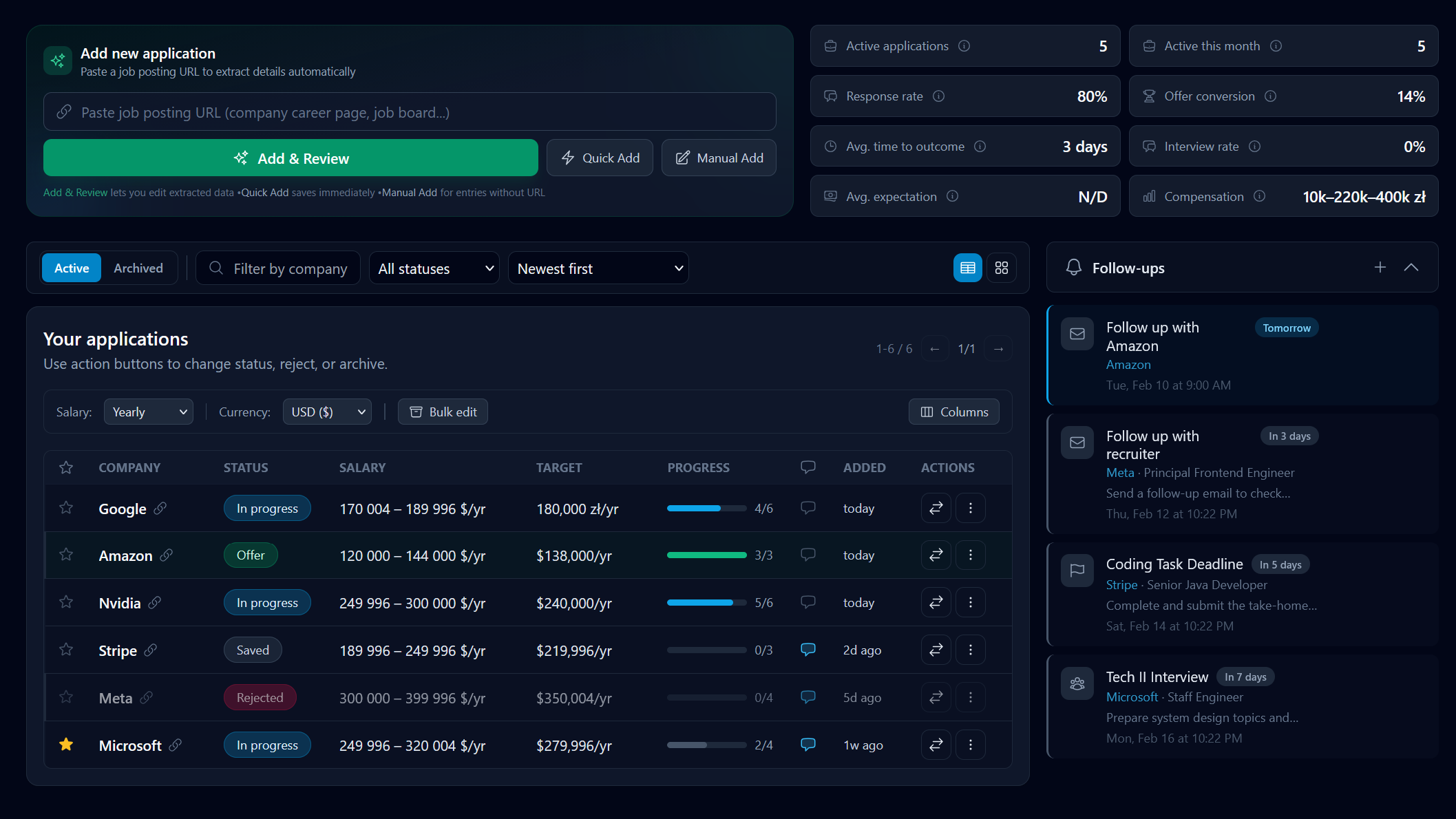
Use the weekly organization workflow to review the shortlist. If several employers reply together, the interview-tracking guide helps keep stages and next actions connected to each role. Pro salary analytics can support comparisons, while basic application tracking and reminders are available on the free plan.
Outlook: use forecasts as context
The skills forecast is useful background for training and workforce planning. For a job seeker, the more actionable evidence is how closely actual openings match your experience and whether employers respond to your applications. Revisit your shortlist regularly and keep source dates visible when using market or salary information.
Start tracking your applications for free
Free includes 10 applications, including archived ones, one resume analysis and one interview quiz. See the plan comparison for Pro features.